

This guide covers every NHL jersey manufacturer and era, from the on-ice authentics worn by players to the replica jerseys sold at retail. Whether you're new to collecting or just trying to figure out exactly what you have, this guide will walk you through each era with accurate, verified information. For sizing details, charts, and deeper technical breakdowns, check out our full Authentic NHL Jersey Comparison Guide and Replica NHL Jersey Comparison Guide.
Heads up: some links on this post are affiliate links. If you buy through one, Grail Snipes may earn a small commission at no extra cost to you.
Fanatics Authentic Pro (2024–Present)
Beginning with the 2024-25 season, Fanatics took over as the official outfitter of NHL on-ice uniforms, ending Adidas's seven-year run. The new jerseys, called "Fanatics Authentic Pro" (FAP), are manufactured by SP Apparel, a Quebec-based company that has been making NHL on-ice jerseys for nearly 50 years, including throughout most of the Adidas era. So while the brand name on the back of the neck changed, the factory did not.
The biggest news for collectors is that Fanatics brought back the retail sale of the true on-ice jersey for the first time in a decade. Under Adidas, MiC jerseys were never available in standard retail. Fanatics changed that with the Authentic Pro line, which are the exact same jerseys worn on the ice, made in the same Canadian factory to the same specifications. At Retailing for between $425 and $475 USD, they are not cheap, but for collectors, the option to buy the genuine article at retail is significant.
The most noticeable visual change from the Adidas era is the elimination of the shoulder dimples. The dimpled panels that defined the look of Adidas MiC and retail jerseys are gone entirely on Fanatics jerseys. The holographic NHL Shield on the front collar is also new, gradually shifting colors depending on the angle you view it from.
Fanatics Team Issued jerseys are the same spec as the retail Authentic Pro. From what is known, the retail FAP carries a "080A" model code on the tag, while a team-issued FAP will have a "0355" code. Team-issued jerseys, as always, do not automatically mean the jersey was worn or touched by the named player — blank team-issued jerseys are routinely customized after the fact.
The four Fanatics tiers, from top to bottom:
| Tier | Made In | Original Retail Price (USD) |
|---|---|---|
| Authentic Pro | Canada | ~$425–475 |
| Premium | Indonesia | ~$180 blank / ~$230 with name & number |
| Breakaway | Indonesia | ~$135 blank / ~$175 with name & number |
The Premium is the closest equivalent to what was previously sold as the retail authentic Adidas jersey. The Breakaway is a replica tier jersey with details that are commonly heat-pressed.
Want a brand new authentic?
We stock game worn and authentic grails you won’t find at retail. If it has to be brand new with tags, NHL Shop is the move.
Shop hockey jerseys on Grail Snipes Shop new NHL jerseys at NHL Shop
Adidas MiC Adizero / Primegreen (2017–2024)
Adidas first released their Adizero jerseys for the 2016 World Cup of Hockey, with the NHL completely converting to Adidas Adizero jerseys for the 2017-18 season. MiC (Made in Canada) Adidas Adizero jerseys are identical to what the players wear on the ice. Adidas really did a great job with the quality, but unfortunately, Adidas MiC jerseys are all team issued — meaning they are not available for retail purchase. Depending on the team and style, these jerseys can be extremely hard to come by.
The jersey material is much more sturdy than a retail authentic (also called an "Indo-authentic") Adidas jersey. A MiC Adidas is more of an airknit material (like a Reebok Edge 2.0), whereas the retail Adidas is a stretchier, softer material (like a Reebok Edge 1.0).
One of the main distinguishing features of the Adidas MiC jerseys is the shoulder dimples. The MiC dimples are deeper, whereas the retail authentic "dimples" are relatively flat but use a different, shiny material that creates a dimple illusion. The retail authentic dimples also don't extend down as far as they do on the MiC jerseys.
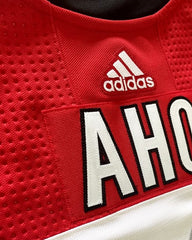
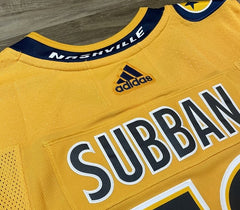
Left: MiC dimples. Right: Retail authentic dimples.
There is also a difference between the MiC and retail authentic fight straps. The MiC fight strap is a double-layered reinforced base, whereas the retail authentic is just a single stitched layer.
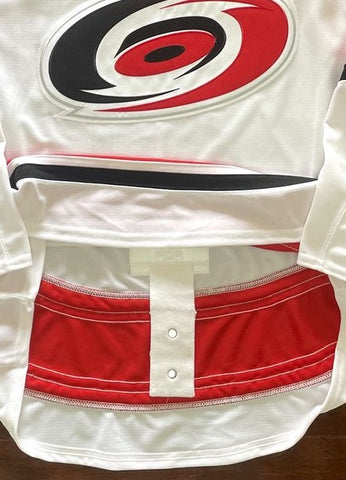
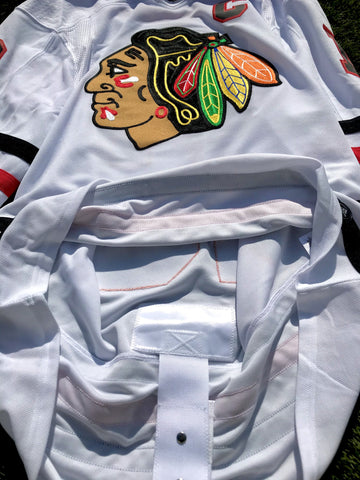
Left: MiC fight strap. Right: Retail authentic fight strap.
For the 2021-22 season, all NHL teams began wearing "Primegreen" jerseys instead of Adizero. Primegreen jerseys are made with a minimum of 50% recycled content and have more detailed embroidery on the crests and shoulder patches.
Adidas Retail Authentic — Climalite (2017–2019) / Primegreen (2019–2024)
Retail authentic Adidas jerseys (also known as "Indo-Adidas" jerseys) are made in Indonesia, and are a lower quality than the Made in Canada (MiC) Adidas jerseys. The retail authentic Adidas jerseys have a fight strap, as well as stitched crests, shoulder patches, and customization. However, factory customization is often stitched single-layered vinyl, instead of the typical stacked or kiss-cut twill on the on-ice versions. The jersey material is more stretchy than an MiC Authentic jersey.
Retail authentic jerseys are called either "Climalite" or "Aeroready," labeled on the inside collar below the size tag. There are no differences between the two other than Climalite being made from 2017–2019 and Aeroready from 2019 onward.
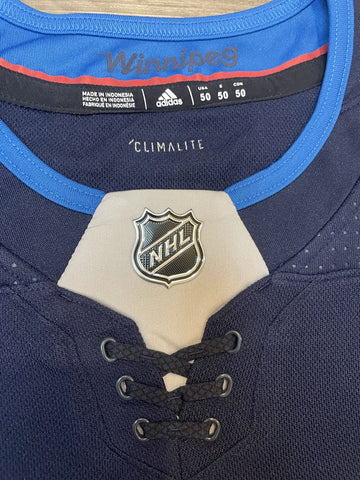
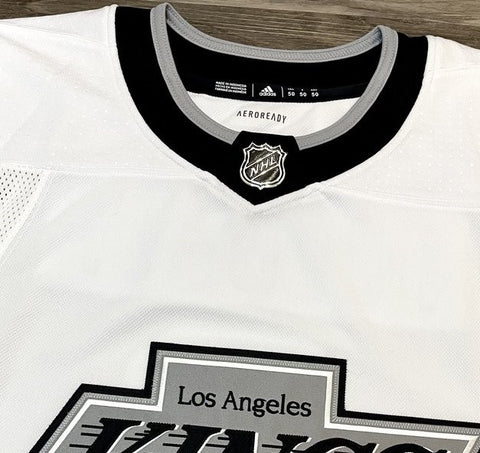
Left: Climalite label. Right: Aeroready label.
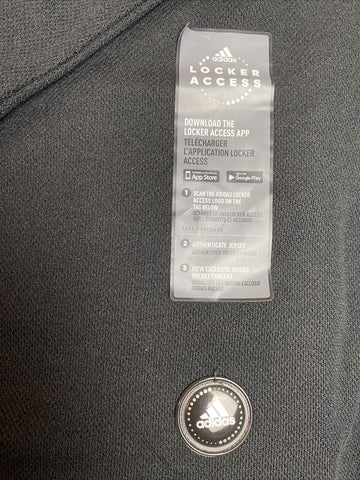
For the 2017-18 season only, retail authentic Adidas jerseys had a black "button" above the front left hem of the jersey. This was not on any Adidas jersey after the 2017-18 season.
Another quirk of the 2017-18 retail authentic jerseys was that the crests and shoulder patches were smaller on any jerseys smaller than a size 50.
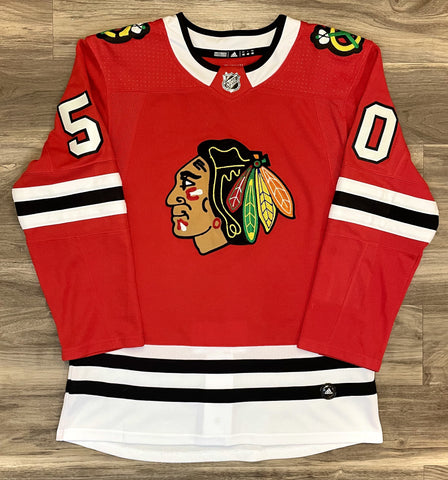
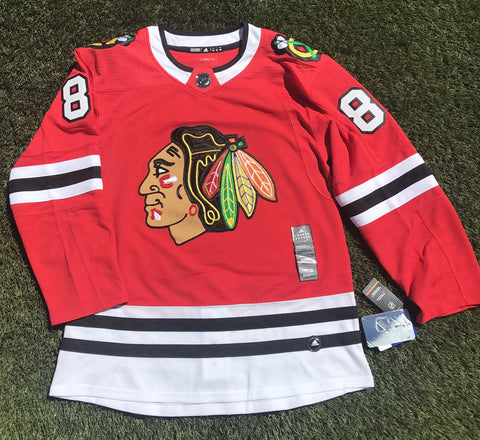
Left: Size 46 (smaller crest). Right: Size 50 (normal crest). Only applies to 2017-18 jerseys.
Reebok Edge 1.0 and 2.0 (2007–2017)
Reebok Edge 1.0 jerseys were first used in the 2007 NHL All-Star Game, with the league completely converting to them the following season. However, NHL players wore Edge 1.0s for only about the first half of the 2007-08 season, with only a select few players continuing to wear them afterward. Many players disliked the heavier ultrafil jersey material on the Edge 1.0s because it trapped heat more easily.
Reebok Edge 2.0 jerseys are made of mostly an air-knit material, with ultrafil on only a few select parts. Other differences include reinforced elbows on the 2.0s (but not on the 1.0s), as well as a slight widening of the sleeve and chest areas on the 2.0s.
Despite 1.0s only being used in-game for about half a season, Reebok continued to sell retail Edge 1.0 jerseys until about 2012. For most of that time, Reebok Edge 2.0 jerseys were only available as game worn or team issued jerseys, making some Edge 2.0 styles incredibly rare.
Several other changes came during the Reebok Edge era, including a switch from the Reebok "Vector" logo to the Reebok wordmark logo:
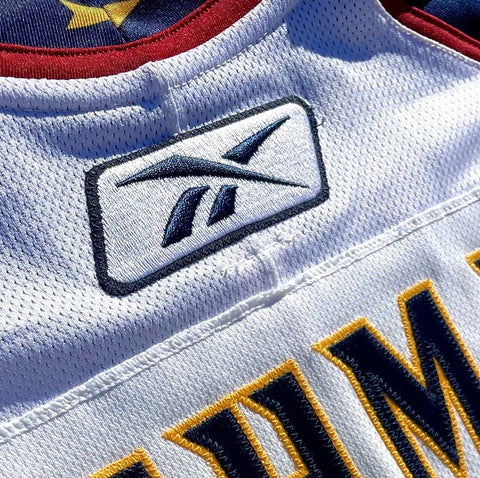

Left: Reebok "Vector" logo (2007–2011). Right: Reebok wordmark logo (2011–2017).
The NHL shield on the collar insert also changed slightly — some players complained the points on the top of the shield were digging into their necks, which led to a softer, thinner version:
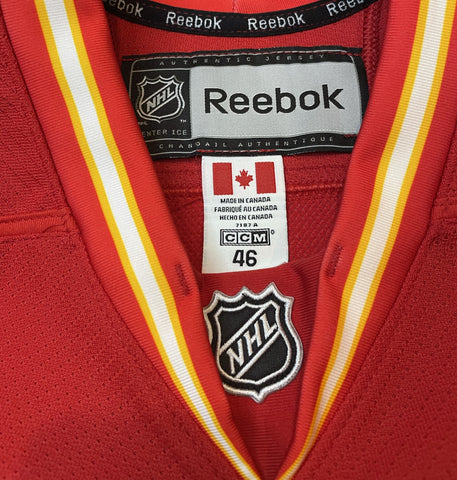
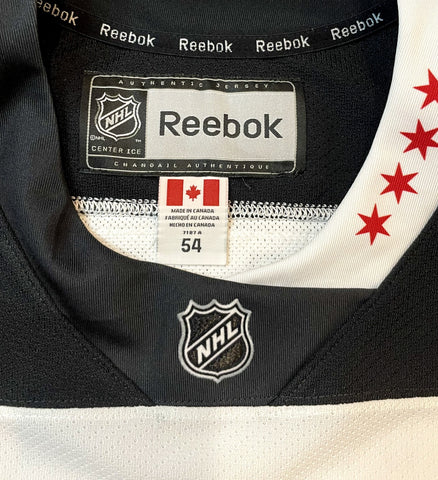
Left: Original hard NHL shield. Right: Softer, thinner shield introduced later.
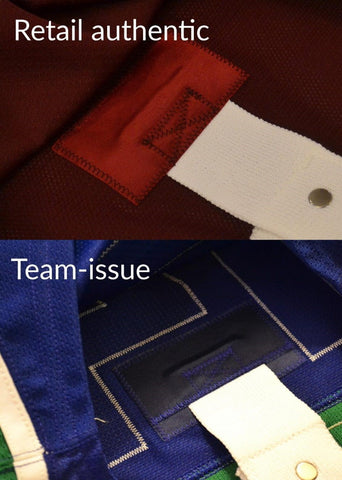
Team issued Reebok Edge jerseys had only a size tag inside the neck, whereas retail Reebok Edge jerseys had an additional retail neck tag (the black and gray Reebok tag). There is also a difference in fight straps: team issued jerseys have a double-layered reinforced fight strap base, while retail authentic jerseys have a single-layered fight strap base.
Reebok Indo-Edge (2011–2017)
Reebok Indo-Edge jerseys were similar to Reebok Edge 2.0 jerseys, but were made in Indonesia and were slightly lower quality (though arguably still better than Edge 1.0s). The jersey is made of an air-knit fabric that is slightly thinner than Reebok 2.0s, and the twill of the fight strap was white, as opposed to being color-matched as on Edge 2.0s.
CCM, Koho, and Reebok 6100 (2000–2007)
Starting in the 2000-01 season, CCM and Koho took over jersey manufacturing for all NHL teams, with CCM manufacturing the white jerseys, and Koho manufacturing the dark and alternate jerseys. The only white jersey manufactured by Koho was the Toronto Maple Leafs third jersey, and the only dark jerseys manufactured by CCM were the All-Star Game jerseys, as well as the New York Rangers' 9/11 memorial jersey.
These jerseys were relatively boxy, with wide sleeve and chest areas. The jersey material was a heavy, yet breathable air-knit material.
Starting in the 2003-04 season, teams wore their dark jerseys at home, whereas teams had always worn white at home prior to the switch. Then in 2005, Reebok took over jersey manufacturing from CCM and Koho, using the exact same jersey model (6100) — just switching out the branding for Reebok.
CCM "Big Block" (1990–2000)
CCM began manufacturing NHL jerseys in 1983. The jerseys underwent many changes and tweaks along the way, and many of those vary from team to team, making it difficult to make hard-and-fast statements about them. Be sure to examine photos and read each jersey's description to get a better idea of the jersey material and quality.
Starter and Pro Player (1995–2000)
Starter first started manufacturing NHL jerseys in 1995 for the newly relocated Colorado Avalanche, and began making jerseys the following year for several other teams including the Blues, Penguins, Coyotes, Bruins, and Rangers. Some teams' jerseys were made of a thin silky mesh material (including the Rangers, Avalanche, Blues 1997-99, and possibly more), but most Starter jerseys were a heavy ultrafil material.
Similar to Adidas jerseys, Starter jerseys can be divided into retail authentics and on-ice authentics. Most retail authentic Starter jerseys were made in El Salvador, with a few made in Haiti. The made-in-Haiti authentics didn't come with fight straps and often had more inconsistent stitching. Made-in-El-Salvador authentics are extremely close to the real deal, occasionally with very minor quality differences compared to on-ice authentics. All on-ice authentic Starter jerseys were made in Berlin, Wisconsin, except for a handful of Montreal Canadiens jerseys which were made in Canada.
After Starter lost their license to produce NHL hockey jerseys in 1999, Pro Player (a subsidiary of Fruit of the Loom) stepped in to manufacture jerseys for teams including the Bruins, Coyotes, Mighty Ducks, Blackhawks, and Oilers. The Pro Player jerseys are all air-knit and are very high quality. Since Pro Player jerseys lasted for just one season, they are often more difficult to find. Most if not all Pro Player jerseys were made in Canada.
Nike and Bauer (1996–1999)
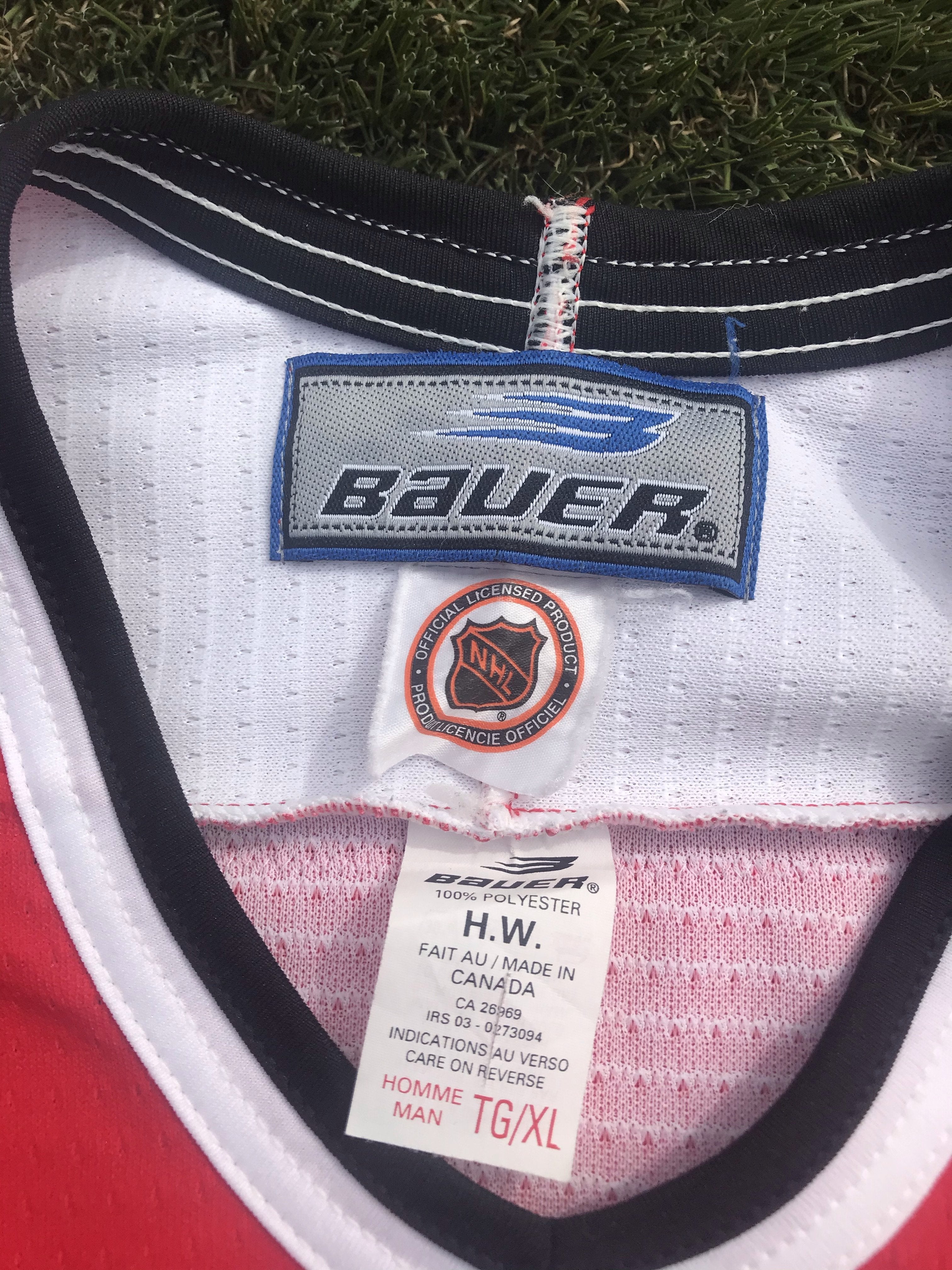
Nike manufactured jerseys for select NHL teams beginning in 1996, including the Blackhawks, Flyers, Maple Leafs, and Mighty Ducks. Bauer (a subsidiary of Nike) manufactured the Nashville Predators jerseys in their inaugural season of 1998-99. They are the only NHL team to wear Bauer jerseys, and they switched to CCM in their second season. Rumor has it that Nike didn't want their logo on an expansion team's jersey, so given that they already manufactured minor league hockey jerseys, they took the tagging from those and put it on the Predators' jerseys.
Replica Jerseys
The sections above cover on-ice and retail authentic jerseys. Below is a summary of the replica jerseys from each era. For more detail on replicas, see our full Replica NHL Jersey Comparison Guide.
CCM Replicas — Four Generations
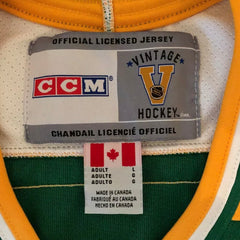
CCM replica jerseys are divided into four generations, which can be identified by the size tag sewn to the inside of the back collar.
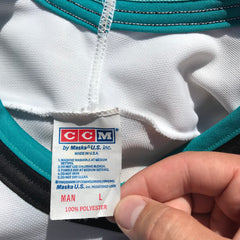
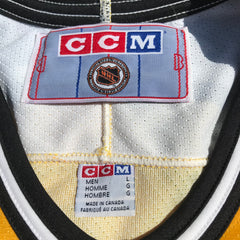


Left to right: 1st Gen, 2nd Gen, 3rd Gen, 4th Gen tags.
The CCM back hem logo also differs by generation. Gens 1–3 have the CCM logo on the back hem, while 4th gen and Koho jerseys have an NHL puck logo on the back hem and the brand logo on the upper back near the collar.

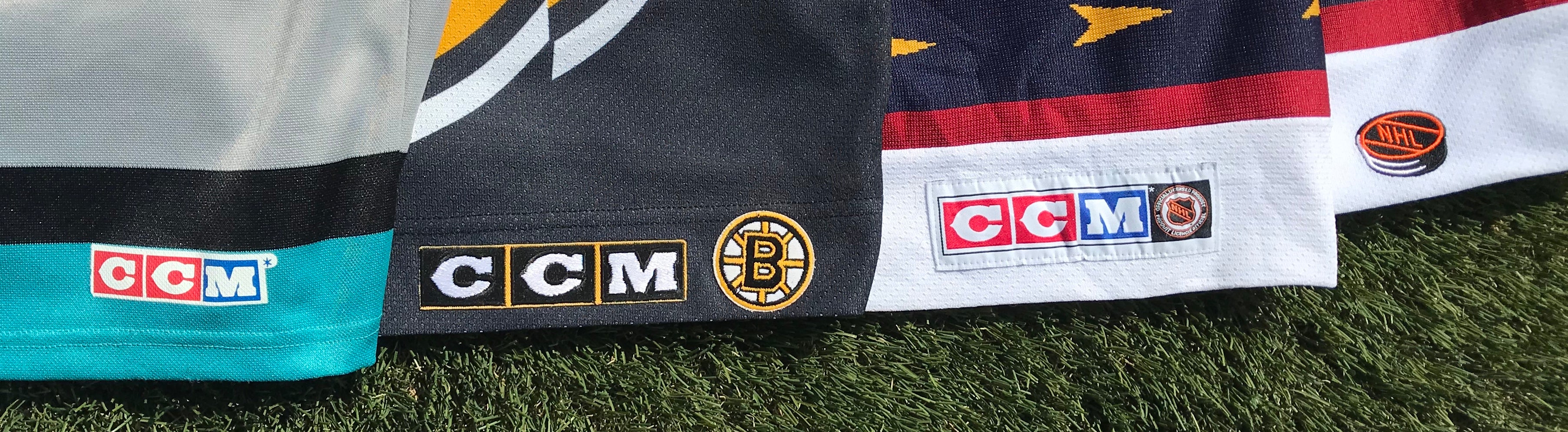
- 1st Gen (Maska): Made in the 1980s and early 1990s in the USA and Canada. Fits about true to size. This is the smallest fit of any CCM jersey. Has a single white size tag that reads "Maska" or "CCM by Maska." Jersey material varies — some are air-knit, some are a faux-ultrafil material that is smooth and silky but can snag and pill easily. Crests are usually glued on and often smaller compared to newer jerseys.
- 2nd Gen: Made from about 1995 to about 1998. Has a blue rink CCM tag. Generally air-knit material. Fits slightly larger than 1st gen. The back hem logo is a glued-on CCM patch with a mini team logo patch.
- 3rd Gen: Made from about 1998–2000. Has a blue and black CCM tag. Fits one size large. The back hem logo is a separate piece of cloth with the NHL logo, usually sewn on.
- 4th Gen / Koho: 4th gen CCM was made from about 2000–2007; Koho from about 2001–2004. Mostly made in Canada, with some made in Indonesia and Korea. Canadian and Indonesian versions usually have glued crests and shoulder patches; Korean versions usually have sewn crests and shoulder patches. Koho and 4th gen CCM are the same jersey aside from the branding. These are considered the highest quality CCM replicas.
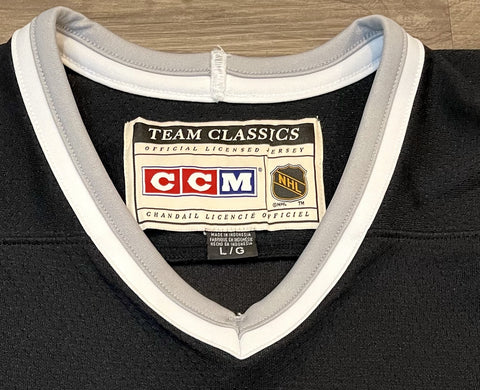
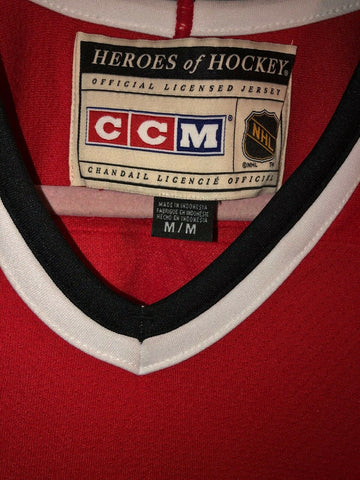
CCM Vintage, Team Classics, and Heroes of Hockey are very similar to the 4th gen and Koho jerseys in terms of fit, material, and quality. Team Classics are usually blank, whereas all Heroes of Hockey are customized. Note: many numbered-size CCM Vintage jerseys are counterfeits — be cautious.
Reebok Premier Replicas (2007–2017)
Almost all Reebok Premier jerseys were made in Indonesia. The two styles of Reebok logo on the back collar identify the era: the Reebok "Vector" logo on jerseys made 2007–2011, and the Reebok wordmark logo on jerseys made 2011–2017.
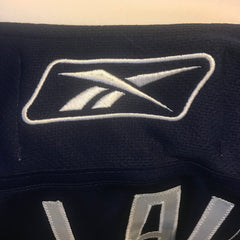
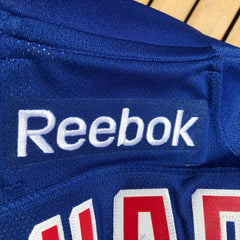
Reebok Premier jerseys fit a size+ larger than a typical t-shirt. The crests are almost always glued on, and the shoulder patches are typically a single layer of screen-printed vinyl sewn to the jersey, prone to fading. The jersey material is breathable but prone to snags and pilling after heavy use.
Starter Replica (1995–2000)
Starter replicas vary quite a bit. They were made in Korea and Indonesia and are generally good quality, but many have inconsistencies such as incorrect customization or other minor inaccuracies. These jerseys fit mostly true to size, if not very slightly baggy. The material is a lighter, softer material — similar to Reebok Premier but less stretchy and more durable. One notable feature is the reinforced two-layered, stitched elbows and shoulders, which are typically found only on authentic jerseys.


Pro Player Replica (1999–2000)
Pro Player replicas were made only from 1999–2000 and are very similar to high-quality Starter replicas. Quality control was more thorough — every Pro Player jersey seen has had stitched crests and shoulder patches, and the reinforced two-layered elbows and shoulders from the Starter line carried over. These jerseys fit about one size large.
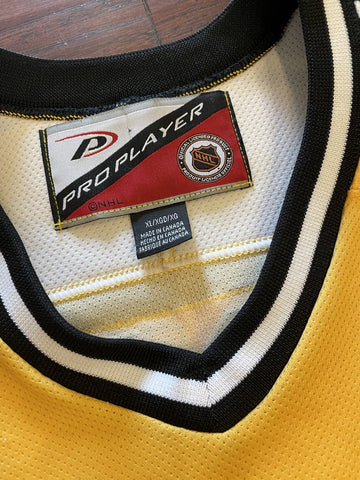

Nike Replica (1996–1999)
Made in Canada from about 1996–1999, Nike NHL replica jerseys are air-knit with glued-on crests and shoulder patches. They fit a size+ large and are generally loose and boxy. You can tell a Nike replica from a Nike authentic by the cuff: if there is a Nike swoosh on the cuff, it is a replica. If there is no swoosh on the cuff, it is likely an authentic jersey with sewn logos and a fight strap (note: this rule does not apply to Olympic jerseys).


Bauer Replica (1997–1998)
Bauer made replica NHL jerseys for a very brief period from about 1997–1998. Made in Canada, they are typically air-knit with stitched multi-layered twill customization and glued-on logos. Nike is the parent company of Bauer, so they fit just like Nike replica jerseys (about one size big and slightly loose and boxy). Bauer manufactured just one authentic NHL jersey: the 1998-99 Nashville Predators inaugural season jersey.
Fanatics Breakaway / Fanatics Vintage (2017–Present)
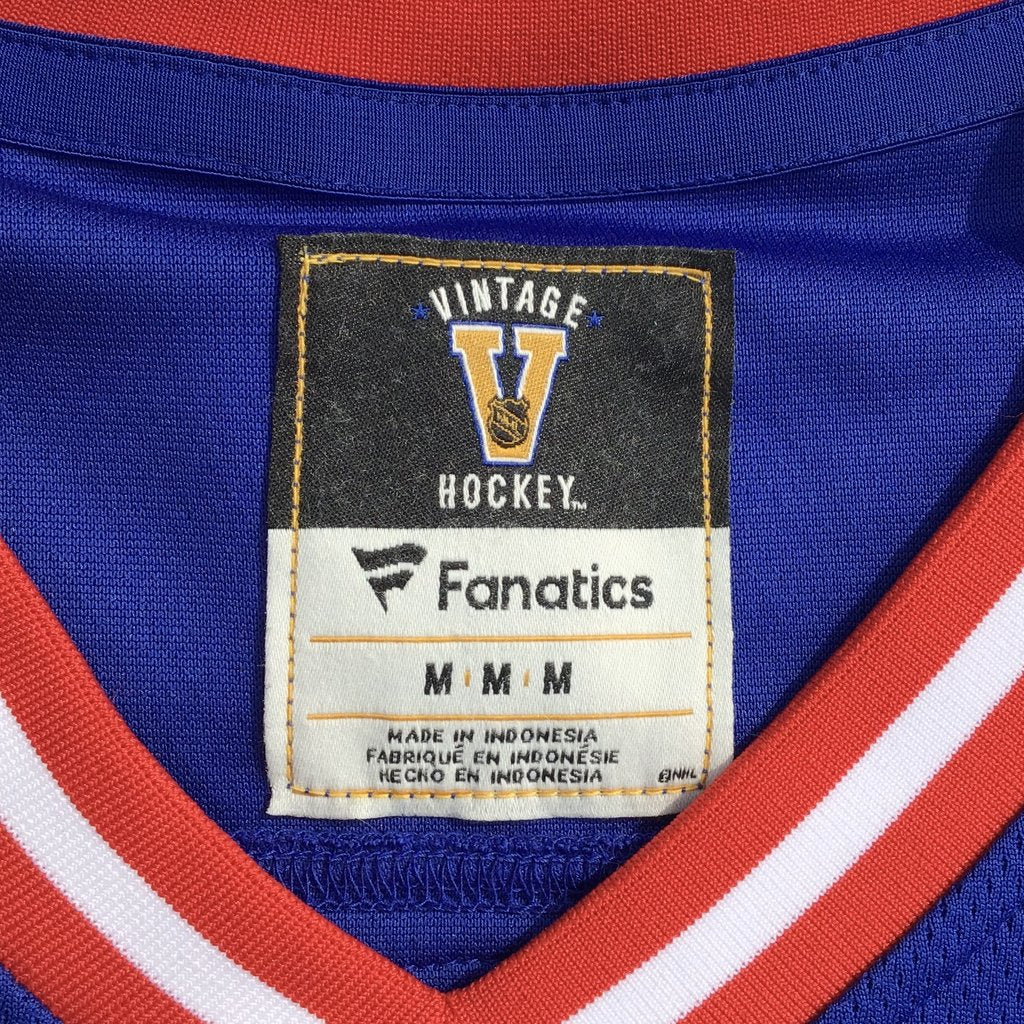
Fanatics Breakaway jerseys are replica-style jerseys of jerseys from 2017 onward. Fanatics Vintage jerseys are replicas of vintage styles. Both fit about one size large. Logos, numbers, and letters are usually sewn on, and nameplates are usually heat-pressed. The logos are a more pliable material than typical crests and shoulder patches (better quality than the screen-printed shoulder patches on Reebok Premiers).

Pre-Fanatics Mitchell & Ness Vintage
Pre-Fanatics Mitchell & Ness Vintage jerseys were the highest quality M&N jerseys, and featured a heavier jersey material with some admittedly tighter sleeves. Crests were stitched twill with embroidered detailing. Numbers were twill. Shoulder patches were fully embroidered. Fight straps were present where the authentics had one. Country of manufacture was mostly Vietnam.


These jerseys only lasted a few years. Fanatics acquired Mitchell & Ness in 2022, and the product line that followed does not match this build.
Mitchell & Ness Blue Line (1.0)
The Blue Line launch in 2023 was the first Mitchell & Ness NHL release under Fanatics, and it landed hard. Crests and numbers were vinyl or heat press instead of twill and embroidery. Colors on several styles were far off from the authentic they were meant to reproduce. Logo placement errors made it through QC, with the San Jose Sharks 2003-04 release becoming the widely shared example after the chest logo got stitched too low. The Hartford Whalers crest was undersized. The Detroit Red Wings 2009 Winter Classic release had the number five placed too high on the back. Retail was around $200.
Blue Line 1.0 sits at the bottom of the collector ranking for modern M&N releases. Reviewers called it the worst jersey line they had seen from the brand, and collector sentiment on r/hockeyjerseys tracks with that. If you are buying M&N on the secondary market, a Blue Line 1.0 is the one release you want to identify and pass on unless the price reflects it.
Mitchell & Ness Blue Line 2.0
Blue Line 2.0 was the mid-cycle upgrade Mitchell & Ness pushed out after the 1.0 backlash, and it was not a full line. Only a handful of styles were released, weighted toward the Edmonton Oilers with at least one Dallas Stars jersey and a couple of others. Crests moved from vinyl to stitched twill with embroidered detailing. Shoulder patches and numbers got the same twill upgrade. The fit and fabric stayed the same as 1.0, so the construction improvements did not include the actual jersey material.
Blue Line 2.0 was pulled from the Mitchell & Ness site later in 2024, with inventory continuing to move through a few smaller retailers after the official listings came down. Collectors treat this run as a stopgap rather than a full fix. For the styles that exist in 2.0, it is a real upgrade over 1.0, but the limited release means most teams never got a 2.0 version at all.
Mitchell & Ness Power Play
Power Play is the current Mitchell & Ness NHL line, launched in late 2024 as the successor to Blue Line. MSRP runs $225 on Mitchell & Ness and $235 at some retailers, with NHL Shop observed at $200 on certain styles. Crests are embroidered. Shoulder patches are embroidered with stitched borders. Numbers are stitched twill. Howecer, some of the special event patches like Stanley Cup patches or anniversary patches are printed or sublimated. Still, the upgrade over Blue Line 1.0 is real.
The catch is what Power Play is not. The fabric reads as a CCM airknit weight regardless of what era the jersey represents, so Reebok Edge era jerseys are not getting Reebok Edge fabric or the Reebok Edge cut. The shape is boxier with a flat hem and no underarm panels. A large branded hem tag sits on the bottom left front on the outside of the jersey, which is the fastest visual tell that you are looking at Power Play instead of an on-ice authentic. Several accuracy errors carried over from Blue Line without being fixed, including the Penguins Robo Pen chest striping, the Hartford Whalers crest size, and a Red Wings Shanahan jersey tagged as 2001-02 that uses the wrong era logo. Glacier twill is no longer in production, so styles that should use it are running standard white twill instead. Power Play is a solid vintage-styled collector jersey at a premium-replica price.
Want a new M&N throwback?
We stock the era originals these lines are built on. For a brand new Blue Line or Power Play, go straight to Mitchell & Ness.
Shop vintage jerseys on Grail Snipes Shop M&N NHL jerseys at Mitchell & Ness
Have questions about a specific jersey or era? Contact us through the Chat feature on grailsnipes.com, DM us on social media, or email us at contact@grailsnipes.com. And browse our current NHL jersey inventory here.